Logo Colombia Colombia
El juego de hablar, sentir y hacer disponible en Yaxa Colombia -15%

El juego de hablar, sentir y hacer

Compra El juego de hablar, sentir y hacer original con envío a todo Colombia

Juguetes y Juegos / Juegos / Juegos de Mesa

Precio y disponibilidad de El juego de hablar, sentir y hacer

$ 385.710,45

$ 453.777

Addi

0 % de interés sin costos adicionales en 3 cuotas de $ 128.570 , pagando con Addi. Obtén tu cupo

Envío gratis a todo Colombia

Disponible en todos nuestros productos, sin costos ocultos ni mínimo de compra.

Stock disponible: 7 unidades en existencia.

Tiempo de entrega: Entrega internacional estimada de 4 a 7 dias habiles en Colombia.

🛒 Comprar ahora
Pago seguro garantizado

Valoración de clientes

4.6 sobre cinco estrellas 239 opiniones

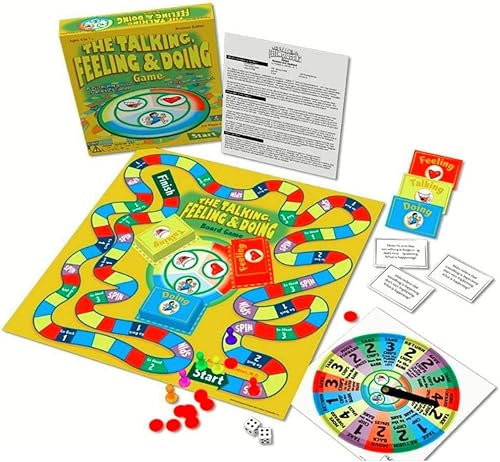
A psychotherapeutic game for children. The first published therapeutic game by Richard A. Gardener, M.D., is still one of the most popular counseling tools used with children in therapeutic settings. A child's responses while playing the game will reveal the psychological issues that are most important to him or her. Three types of cards offer prompts that will engage the child and, through their responses, reveal directions for therapeutic intervention.This therapy game is played like a standard board game. The child and therapist place their playing pieces on Start, then take turns throwing the dice, and moving their pawn along a path of squares. Depending upon the color of the square on which the piece lands, the player selects a talking card, feeling card, or doing card. The questions and directions in each set of cards include items that are not anxiety provoking - How old are you? - to items that are moderately anxiety provoking - Everyone in the class was laughing at a boy. What had happened? If the child responds they receive a token reward chip. The winner is the player who has accumulated the most chips after the players have reached Finish. The child's responses are generally revealing of those psychological issues that are most important at that time. The engaging game format utilizing token reinforcement enhances the child's interest and elicits spontaneous revelations. The information gained provides diagnostically meaningful insights into the child's psychodynamics, and is of therapeutic value because each response can serve as a catalyst for therapeutic interchanges.The game is of value in group psychotherapy, in the treatment of learning-disabled children because many of the cards are particularly applicable to these children, and with children who can reveal themselves more freely but who may also need a respite from more anxiety-provoking therapeutic endeavors.

Beneficios clave de El juego de hablar, sentir y hacer

  • One of the most popular tools used in child psychotherapy
  • The questions and directions in each set of cards include items that are not anxiety provoking to items that are moderately anxiety provoking
  • The information gained while playing provides diagnostically meaningful insights into the child's psychodynamics
  • Suitable for ages 4 and Up
  • Intended for use by mental health professionals
  • El número de Modelo (ItemModelNumber)
  • SG_B000MBE3S2_US

Ficha técnica

Fabricante
Creative Therapeutics
Dimensiones
9,75 x 9,75 x 2,5 pulgadas
SKU
B000MBE3S2
  • Compra segura y envío rápido a todo Colombia
  • Garantía Yaxa y soporte experto en tu El juego de hablar, sentir y hacer
  • Atención personalizada por WhatsApp y canales oficiales.

Descripción detallada de El juego de hablar, sentir y hacer

A psychotherapeutic game for children. The first published therapeutic game by Richard A. Gardener, M.D., is still one of the most popular counseling tools used with children in therapeutic settings. A child's responses while playing the game will reveal the psychological issues that are most important to him or her. Three types of cards offer prompts that will engage the child and, through their responses, reveal directions for therapeutic intervention.This therapy game is played like a standard board game. The child and therapist place their playing pieces on Start, then take turns throwing the dice, and moving their pawn along a path of squares. Depending upon the color of the square on which the piece lands, the player selects a talking card, feeling card, or doing card. The questions and directions in each set of cards include items that are not anxiety provoking - How old are you? - to items that are moderately anxiety provoking - Everyone in the class was laughing at a boy. What had happened? If the child responds they receive a token reward chip. The winner is the player who has accumulated the most chips after the players have reached Finish. The child's responses are generally revealing of those psychological issues that are most important at that time. The engaging game format utilizing token reinforcement enhances the child's interest and elicits spontaneous revelations. The information gained provides diagnostically meaningful insights into the child's psychodynamics, and is of therapeutic value because each response can serve as a catalyst for therapeutic interchanges.The game is of value in group psychotherapy, in the treatment of learning-disabled children because many of the cards are particularly applicable to these children, and with children who can reveal themselves more freely but who may also need a respite from more anxiety-provoking therapeutic endeavors.

Características destacadas

  • One of the most popular tools used in child psychotherapy
  • The questions and directions in each set of cards include items that are not anxiety provoking to items that are moderately anxiety provoking
  • The information gained while playing provides diagnostically meaningful insights into the child's psychodynamics
  • Suitable for ages 4 and Up
  • Intended for use by mental health professionals
  • El número de Modelo (ItemModelNumber)
  • SG_B000MBE3S2_US

Otros clientes también compraron